100+ Synonyms for Emperor: Meanings, Examples, and Related Words
An emperor is a supreme ruler who governs an empire or holds the highest imperial authority. Throughout history, emperors have led vast territories, commanded armies, influenced cultures, and shaped the political systems of entire civilizations. However, the word emperor does not always fit every sentence. Depending on the context, you may need another word for emperor that sounds more formal, historical, powerful, or descriptive.
If you are looking for synonyms for emperor, this guide explains the most useful alternatives in simple English. You will discover the meanings of words such as monarch, sovereign, ruler, autocrat, potentate, overlord, and conqueror. You will also learn about historical titles, royal ranks, authoritarian leaders, and expressions that describe imperial power.
Whether you are writing an essay, creating a fantasy story, studying history, or searching an emperor thesaurus for the right word, understanding these differences can help you choose more precise language.
This guide also explores related vocabulary, including synonyms for monarch, synonyms of empire, synonyms for monarchy, and words associated with authority, domination, majesty, and leadership.
What Is Another Word for Emperor?
The best synonym for emperor depends on the meaning you want to express.
Common synonyms for emperor include monarch, sovereign, ruler, imperial ruler, supreme ruler, potentate, and overlord. These words describe someone with high authority, although they are not interchangeable in every situation.
For example, monarch is a broad term for a king, queen, emperor, or another hereditary head of state. Sovereign emphasizes supreme authority or independence. Autocrat describes a person who exercises power with few or no effective restrictions, while conqueror emphasizes someone who defeats others and takes control of territory.
Here are a few quick examples:
- The emperor ruled a vast empire. The monarch ruled a vast empire.
- The emperor held supreme authority. The sovereign held supreme authority.
- The emperor controlled the government without meaningful opposition. The autocrat controlled the government without meaningful opposition.
- The emperor expanded his territory through war. The conqueror expanded his territory through war.
The first two replacements are often suitable in historical writing. The final two emphasize particular characteristics rather than simply naming an imperial title.
100+ Synonyms for Emperor and Their Meanings
The following words and expressions are grouped by meaning to make it easier to find the right synonym emperor for your writing. Some are close synonyms, while others are historical titles or related descriptions.
1. Common Synonyms for Emperor
These words are useful when discussing royal authority, political leadership, or the highest position in a state.
- Monarch — A king, queen, or other sovereign ruler. Example: The monarch addressed the nation.
- Sovereign — A supreme ruler or an independent governing authority. Example: The sovereign controlled the affairs of the realm.
- Ruler — A person who governs a country, territory, or people. Example: The ruler introduced new laws.
- Imperial ruler — A person who governs an empire. Example: The imperial ruler expanded the kingdom’s influence.
- Supreme ruler — A person who holds the highest position of authority. Example: The supreme ruler made the final decision.
- Potentate — A powerful ruler, especially one with extensive authority. Example: The potentate received foreign ambassadors.
- Overlord — A ruler or authority figure with power over others. Example: The overlord demanded loyalty from his subjects.
- Head of state — The person who represents a state’s highest constitutional or political office. Example: The head of state attended the ceremony.
- Sovereign monarch — A monarch who holds sovereign authority. Example: The sovereign monarch represented the independence of the realm.
- Crowned ruler — A ruler whose authority is symbolized by a crown. Example: The crowned ruler appeared before the public.
- Supreme monarch — A descriptive phrase for a monarch with the highest authority. Example: The story portrayed him as the supreme monarch.
- Imperator — A Latin title associated with military command and Roman imperial authority. Example: The inscription honored the imperator.
- Autarch — A term for an independent or absolute ruler, depending on its historical or political context. Example: The author described the fictional leader as an autarch.
- Lord paramount — A historical title for a person with superior authority in a particular hierarchy. Example: The lord paramount commanded the allegiance of lesser nobles.
- Paramount ruler — A descriptive term for a ruler whose authority stands above others. Example: The paramount ruler settled the dispute.
2. Synonyms for an Autocratic or Authoritarian Emperor
An emperor may possess extensive power, but not every emperor is necessarily oppressive or dictatorial. The following words describe leadership styles in which authority is concentrated or used harshly.
Also Read: 100+ Deja Vu Synonyms: Meanings, Examples, Spelling, and Opposites
- Autocrat — A ruler who exercises power with little effective restraint. Example: The autocrat rejected challenges to his authority.
- Dictator — A leader who holds concentrated political power, often without meaningful democratic accountability. Example: The dictator restricted political opposition.
- Despot — A ruler who exercises power in an oppressive or arbitrary manner. Example: The despot punished those who criticized him.
- Tyrant — A cruel or unjust ruler who abuses power. Example: The tyrant ruled through fear.
- Absolute ruler — A ruler whose authority is not meaningfully limited by other institutions. Example: The absolute ruler controlled major government decisions.
- Strongman — A leader who maintains power through force, personal authority, or control of institutions. Example: The strongman used military support to remain in office.
- Authoritarian ruler — A leader who restricts political freedom and concentrates authority. Example: The authoritarian ruler limited public protests.
- Dictatorial leader — A leader who governs in a controlling, autocratic manner. Example: The dictatorial leader ignored criticism.
- Totalitarian leader — A leader who seeks extensive control over political and social life. Example: The totalitarian leader monitored public expression.
- Oppressor — Someone who subjects others to unjust or harsh control. Example: The oppressed citizens eventually challenged their oppressor.
- Dominant ruler — A ruler who exercises greater influence than rivals or subordinate authorities. Example: The dominant ruler shaped regional politics.
- Repressive ruler — A leader who suppresses opposition or personal freedoms. Example: The repressive ruler banned independent publications.
- Oppressive leader — A leader whose policies impose unfair or harsh restrictions. Example: The oppressive leader increased public resentment.
- Iron-fisted ruler — An informal expression for a ruler who governs harshly. Example: The iron-fisted ruler demanded unquestioning obedience.
- Power-hungry leader — A person who constantly seeks greater power. Example: The novel’s power-hungry leader betrayed former allies.
- Despotic monarch — A monarch who uses royal authority cruelly or arbitrarily. Example: The despotic monarch ignored the suffering of the people.
- Tyrannical ruler — A ruler who acts with cruelty and injustice. Example: The tyrannical ruler punished peaceful dissent.
- Supreme commander — The highest military commander in a particular structure. Example: The supreme commander ordered the troops to withdraw.
- Imperious leader — A leader who behaves in an overbearing or excessively commanding way. Example: The imperious leader expected immediate agreement.
- Authoritarian figure — A person known for favoring strict control and concentrated power. Example: The authoritarian figure opposed political reform.
These terms are especially useful when searching for an alternative to emperor that conveys domination, oppression, or political control. They are descriptive words, not exact replacements for the imperial title itself.
3. Historical Titles Used for Emperors and Powerful Rulers
Different civilizations developed distinct titles for rulers. These terms can add historical accuracy to essays, novels, and educational writing.
- Caesar — A Roman name that became associated with imperial authority. Example: The ruler adopted the title Caesar.
- Tsar or czar — A title historically used by Russian and some other Slavic rulers. Example: The tsar issued a royal decree.
- Kaiser — The German title for emperor, historically associated with Germany and Austria. Example: The kaiser met with his advisers.
- Pharaoh — The title used for rulers of ancient Egypt. Example: The pharaoh commissioned a monumental tomb.
- Shah — A Persian title meaning king. Example: The shah welcomed the visiting delegation.
- Sultan — A title used by rulers in various Muslim states and empires. Example: The sultan appointed a new governor.
- Caliph — A title for a successor to Muhammad as leader of the Muslim community in historical Islamic political traditions. Example: The historian examined the caliph’s administration.
- Khan — A title used by rulers and leaders among several Central Asian and Mongol peoples. Example: The khan negotiated with neighboring leaders.
- Great Khan — A title associated particularly with supreme leadership among the Mongols. Example: The Great Khan united competing groups.
- Padishah — A title meaning a great king or emperor, used by several historical rulers. Example: The padishah received the foreign envoy.
- Mikado — An older English term for the emperor of Japan. Example: The nineteenth-century text referred to the Japanese ruler as the Mikado.
- Tenno — A transliteration of the Japanese imperial title commonly rendered as “Emperor.” Example: The document referred to the tenno and the imperial household.
- Basileus — An ancient Greek title meaning king, with particular significance in Byzantine history. Example: The inscription described the ruler as basileus.
- Augustus — An honorific title adopted by the first Roman emperor and used by later emperors. Example: Augustus became an important imperial title.
- Shogun — A Japanese military ruler who historically exercised governing power under the imperial system. Example: The shogun controlled the country’s military administration.
- Samrat — A Sanskrit-derived term used for an emperor or supreme king in South Asian traditions. Example: The poem praised the samrat’s victories.
- Chakravartin — An ancient Indian concept of a universal or ideal ruler. Example: The inscription portrayed the king as a chakravartin.
- Maharaja — A title meaning great king, used by rulers in South Asia. Example: The maharaja supported the construction of a palace.
- Maharana — A royal title used by certain rulers in the Indian subcontinent. Example: The maharana defended his territory.
- Sapa Inca — The title of the supreme ruler of the Inca Empire. Example: The Sapa Inca governed a far-reaching Andean state.
- Huey Tlatoani — The title of the supreme ruler of the Mexica, commonly called the Aztecs. Example: The Huey Tlatoani held a central political and religious role.
- Basileus ton Rhomaion — A Greek imperial title meaning “Emperor of the Romans.” Example: The historian studied the use of Basileus ton Rhomaion in Byzantine records.
- Imperial sovereign — A descriptive expression for the sovereign ruler of an empire. Example: The imperial sovereign received reports from distant provinces.
These titles are not universally interchangeable. Their meanings depend on language, culture, period, and political structure. When writing history, use the title that belongs to the specific civilization rather than replacing every ruler with the word emperor.
4. Royal and Aristocratic Titles Related to Emperor
These terms describe members of royal families, noble ranks, or people associated with hereditary authority.
Also Read: 100 Synonyms for Negatively With Meanings and Examples
- King — A male monarch in many royal systems. Example: The king signed the treaty.
- Queen — A female monarch or, in some systems, the wife of a king. Example: The queen welcomed the guests.
- Empress — A female emperor or the wife of an emperor, depending on the historical context. Example: The empress supported the arts.
- Prince — A male royal or a ruler of a principality. Example: The prince inherited the throne.
- Princess — A female royal or the female ruler of a principality in certain systems. Example: The princess represented her family at the ceremony.
- Grand prince — A high-ranking royal title used in several European and Eurasian traditions. Example: The grand prince governed the territory.
- Grand duke — A ruler or member of a royal house with a rank above a duke in certain systems. Example: The grand duke attended the state event.
- Archduke — A title historically associated with the Habsburg dynasty. Example: The archduke served as a senior royal figure.
- Duke — A nobleman or ruler of a duchy. Example: The duke controlled extensive estates.
- Duchess — A woman holding the rank of duchess or the wife of a duke. Example: The duchess funded a hospital.
- Lord — A title or form of address associated with nobility or authority. Example: The lord called his advisers together.
- Lady — A title or form of address for a woman of noble rank in certain traditions. Example: The lady managed the estate.
- Noble — A person belonging to a hereditary aristocratic class. Example: The noble advised the king.
- Aristocrat — A member of the upper social class traditionally associated with inherited rank. Example: The aristocrat owned several country estates.
- Peer — A member of a recognized noble rank in certain political systems. Example: The peer attended the parliamentary session.
- Regent — A person who governs on behalf of a monarch who cannot rule personally. Example: The regent managed the kingdom during the young king’s childhood.
- Viceroy — A governor who represents a monarch in a territory. Example: The viceroy administered the distant province.
- Prince-regent — A prince who exercises a monarch’s authority during a period of incapacity or absence. Example: The prince-regent carried out official duties.
- Heir apparent — A person who is first in line to inherit a throne or title under the applicable succession rules. Example: The heir apparent prepared for future responsibilities.
These words may appear in an emperor thesaurus or a list of king synonyms, but they refer to different positions. A duke, regent, or heir apparent is not automatically an emperor.
5. Military and Conquest-Related Words
Emperors have sometimes expanded their territory through warfare, but military achievement is only one part of imperial history. These words are appropriate when the context focuses on battles, command, or territorial expansion.
- Conqueror — A person who defeats an enemy and takes control of territory. Example: The conqueror established a new political order.
- Conquerer — A less common spelling variant of conqueror; “conqueror” is the standard form in modern writing. Example: The writer corrected “conquerer” to “conqueror.”
- Warlord — A military leader who controls territory or people through armed force. Example: The warlord competed with neighboring factions.
- Commander — A person responsible for directing troops or an organization. Example: The commander planned the campaign.
- Commander-in-chief — The highest-ranking authority over a country’s or organization’s armed forces, according to its system. Example: The commander-in-chief reviewed the military strategy.
- General — A senior military officer. Example: The general organized the defense.
- Captain — A rank or leadership title used in military, maritime, and other settings. Example: The captain led the unit through difficult conditions.
- Military ruler — A leader who governs primarily through military power. Example: The military ruler imposed emergency restrictions.
- Empire builder — A person who expands or establishes an empire, or, figuratively, a person who builds a large organization. Example: The historian described the monarch as an empire builder.
- Victor — Someone who wins a contest, battle, or conflict. Example: The victor returned to the capital.
- Warrior king — A king known for personally leading or emphasizing military campaigns. Example: The legend celebrated the warrior king.
- Military strongman — A leader who relies heavily on military force to maintain authority. Example: The military strongman suppressed rival factions.
- Tribute-taking ruler — A ruler who requires subordinate states or communities to provide tribute. Example: The tribute-taking ruler received goods from neighboring territories.
- Unifier — A person who brings separate territories or groups under one authority. Example: The unifier brought rival provinces together.
If you need a synonym for conqueror, words such as victor, military leader, empire builder, and warlord may fit particular sentences. However, a conqueror is defined by conquest, while an emperor is defined by imperial status or authority.
6. Words for Powerful and Influential People
Not every powerful person is a monarch. The following words can describe wealth, influence, leadership, or social standing.
- Magnate — A wealthy and influential person, especially in business or industry. Example: The industrial magnate financed the railway.
- Tycoon — A person with substantial wealth and business power. Example: The technology tycoon invested in new companies.
- Mogul — An influential person in a particular industry. Example: The media mogul owned several publications.
- Master — A person with control, authority, or exceptional skill in a particular field. Example: The master of the estate managed its affairs.
- Chief — A leader of a group, community, or organization. Example: The chief negotiated with neighboring communities.
- Patriarch — A senior male family leader or a foundational male figure in a group or tradition. Example: The patriarch guided the family.
- Leader — A person who guides or directs others. Example: The leader encouraged cooperation.
- Authority — A person or institution with recognized power, knowledge, or responsibility. Example: The local authority approved the project.
- Figurehead — A person who holds a visible position but may have little real decision-making power. Example: The monarch became a figurehead under the new constitution.
- Protector — Someone who guards or defends others. Example: The people regarded the ruler as their protector.
- Patron — A person who provides support, often for the arts, education, or a cause. Example: The royal patron supported the scholars.
- Dominant figure — A person with significant influence over a group or situation. Example: The dominant figure shaped the court’s decisions.
- Power broker — Someone who influences decisions by using political, social, or financial connections. Example: The power broker helped negotiate the agreement.
- Preeminent leader — A leader who holds a particularly distinguished position. Example: The preeminent leader brought several factions together.
These terms can serve as alternatives when writing figuratively about a person with emperor-like influence. A magnate or mogul, for instance, may dominate an industry without having any royal title.
Words That Describe Imperial Power and Personality
Some writers want a descriptive word rather than a noun naming a ruler. The following adjectives help explain the character, status, or behavior associated with an emperor.
| Word | Meaning | Example |
| Imperial | Related to an empire or emperor | The imperial court welcomed foreign visitors. |
| Authoritarian | Favoring concentrated political control | The authoritarian government restricted dissent. |
| Dominating | Exercising strong control or influence | The dominating leader controlled every discussion. |
| Domineering | Attempting to control others in an overbearing way | His domineering behavior angered the council. |
| Commanding | Showing authority or inspiring attention | She spoke in a commanding voice. |
| Overpowering | So strong that it is difficult to resist | The army had an overpowering advantage. |
| Omnipotent | All-powerful; often used in religious or figurative contexts | The story portrayed the deity as omnipotent. |
| Godlike | Resembling a god in power, beauty, or ability | The epic gave the hero godlike strength. |
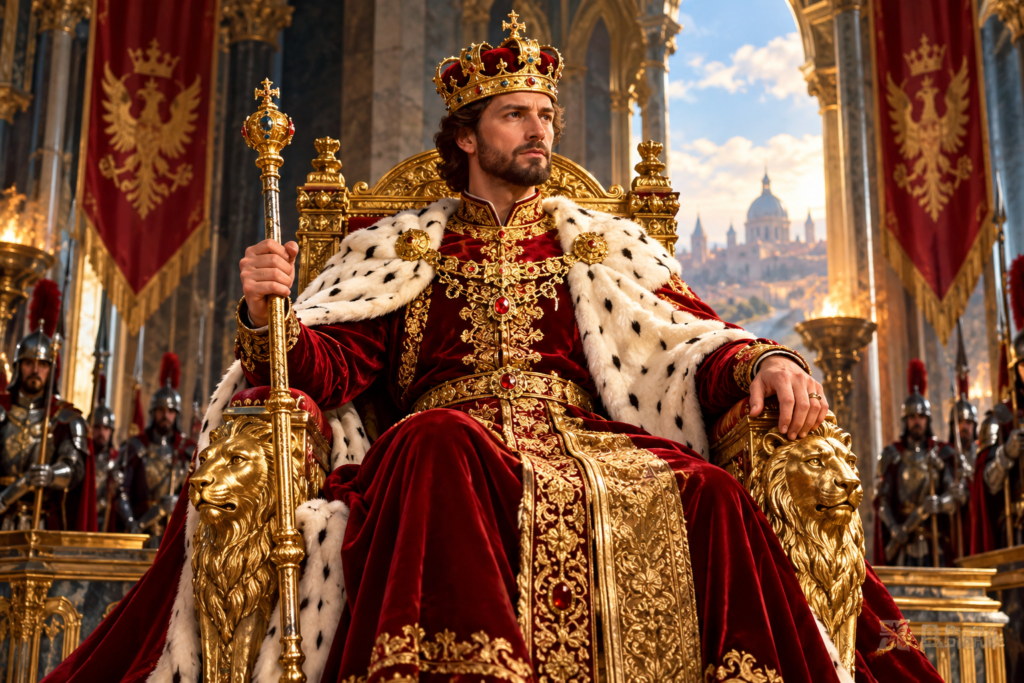
| Majestic | Grand, dignified, and impressive | The emperor entered the majestic hall. |
| Regal | Having the dignity or appearance of royalty | The portrait showed a regal expression. |
| Exalted | Held in very high regard or elevated in rank | The ruler occupied an exalted position. |
| Supreme | Highest in rank, authority, or degree | The council granted him supreme command. |
| Tyrannical | Cruel, unjust, or oppressive in the exercise of power | The tyrannical policy sparked protests. |
| Oppressive | Imposing harsh or unjust restrictions | The oppressive system limited personal freedom. |
| Despotic | Exercising power in an arbitrary or cruel way | The novel described a despotic court. |
| Imperious | Arrogant or overbearing in manner | The imperious official dismissed every objection. |
| Authoritative | Showing confidence or recognized authority | The historian gave an authoritative account. |
| Unchallenged | Not opposed or questioned by rivals | The ruler’s position remained unchallenged for years. |
| All-powerful | Having unlimited or nearly unlimited power | The fantasy emperor appeared all-powerful. |
| Preeminent | More important or distinguished than others | The emperor was the preeminent figure in the region. |
These descriptions also help with related searches such as synonym domineering, synonyms of domineering, overpowering synonym, synonyms for commanding, another word for domineering, another word for tyrannical, synonyms of oppressive, and another word for oppressive.
Emperor vs. King vs. Monarch vs. Sovereign
Although these terms overlap, they do not mean exactly the same thing.
| Word | Main meaning | Best use |
| Emperor | A ruler of an empire | Writing about imperial systems |
| King | A male monarch in many royal systems | Describing a king or kingdom |
| Monarch | A sovereign head of state in a monarchy | General discussions of royalty |
| Sovereign | A supreme ruler or independent authority | Emphasizing supreme authority |
| Autocrat | A ruler with little effective restraint on power | Describing concentrated rule |
| Tyrant | A cruel or unjust ruler | Emphasizing abusive behavior |
| Conqueror | Someone who defeats others and takes territory | Discussing warfare and expansion |
| Magnate | A wealthy and influential person | Discussing business or industry |
For example, a king may rule a kingdom, while an emperor traditionally rules an empire containing multiple territories or peoples. A sovereign may be a king, queen, or emperor. An autocrat describes how power is exercised, not necessarily the ruler’s official title.
This distinction is useful when searching for a synonym for ruler, a synonym of sovereign, monarch synonym, ruler synonyms, or another word for king or emperor.
Synonyms for Empire and Monarchy
Some related search terms refer to political systems rather than individual rulers. Understanding them helps prevent incorrect word choices.
Synonyms and Related Terms for Empire
An empire is a political structure in which one central authority governs extensive territories or multiple peoples. Depending on the sentence, related expressions may include:
- Imperial state
- Imperial realm
- Imperial domain
- Imperial dominion
- Imperial power
- Imperial territory
- Realm
- Dominion
- Vast state
- Multi-territorial state
These are related expressions, not perfect replacements in every context. The best synonym for empire depends on whether you mean a political system, a geographic area, or a figurative business empire.
For example: “The emperor expanded his empire” could become “The emperor expanded his dominion.” In a business context, “She built a media empire” could become “She built a powerful media business.”
These examples address searches such as synonyms of empire, empire synonym, synonym for empire, synonyms empire, empire synonyms, empires synonyms, and empire thesaurus.
Synonyms and Related Terms for Monarchy
A monarchy is a system of government in which a monarch serves as head of state. Related terms include:
- Royal government
- Monarchical system
- Hereditary rule
- Royal institution
- Crown government, where appropriate to the context
A monarchy is not the same as an emperor. The emperor is the ruler; the monarchy is the system.
This distinction is important when researching synonyms for monarchy, synonyms of monarchy, and monarchy synonyms.
Your Majesty: Meaning and Alternatives
“Your Majesty” is a formal form of address used when speaking directly to a king, queen, emperor, or empress in traditions where the style applies. It is not normally replaced by a simple synonym in direct conversation.
Depending on the person and royal tradition, related formal expressions may include “His Majesty,” “Her Majesty,” “His Imperial Majesty,” or “Her Imperial Majesty.” The correct form depends on the title and established protocol.
If you are looking for a your majesty synonym for fiction or dialogue, “Your Imperial Majesty” may be appropriate for an emperor or empress in a setting that uses that style. “Your Highness” is used for certain other royal ranks and should not automatically be treated as equivalent.
The word majesty can also describe grandeur, dignity, or impressive beauty. In that descriptive sense, related words include magnificence, splendor, grandeur, dignity, and regal presence. These are contextual alternatives for synonym for majesty, not forms of royal address.
Related Vocabulary: Patriotism, Election, Divinity, and Other Concepts
Searches for synonyms often bring together words that share a theme without sharing the same meaning. The following distinctions help writers use them correctly.
Patriot and Patriotism
A patriot is someone who shows love, loyalty, or commitment to their country. Words associated with patriotism include loyal citizen, national supporter, and devoted countryman or countrywoman, depending on the sentence.
A patriot is not necessarily an emperor, monarch, or ruler. A person can support their country without holding political power. These distinctions are useful for searches such as synonyms for patriot.
Elected and Election-Related Terms
The word elected describes someone chosen through a vote or another formal selection process. Related expressions include chosen by voters, selected through an election, and democratically elected, when the process supports that description.
An elected leader may be a president, mayor, legislator, or other officeholder. An emperor may inherit a title or acquire power through other means, so “elected” is not a general synonym for emperor.
These explanations cover searches such as synonym for elected, synonyms for elected, synonyms of elected, and elected synonym.
Divinity, Godlike, and Immortality
Divinity refers to a divine being or the quality of being divine. Related terms can include deity, godhood, divine nature, and godlike status, depending on the context.
Also Read: 120+ Synonyms for Evaluation: Meanings, Examples, and How to Use Them
Immortality means the state of living forever or being exempt from death. Related expressions include eternal life, deathlessness, and everlasting existence.
Neither divinity nor immortality is a synonym for emperor. They may appear in mythology, religion, or fantasy stories about rulers who are treated as gods or believed to live forever.
This distinction helps with searches such as synonym divinity, divinity synonyms, synonyms for godlike, another word for immortality, synonym of immortal, immortal synonym, and synonyms of immortal.
Pauper and Poverty-Related Terms
A pauper is a very poor person. Related words include impoverished person, destitute person, and needy person, although each expression carries a slightly different tone.
A pauper is the opposite of the wealthy and powerful image often associated with an emperor, but the words are not synonyms. This section addresses searches for synonym pauper, synonyms of pauper, and synonyms for pauper.
Triumph, Exaltation, and Preeminence
A triumph is a great victory or achievement. Related terms include victory, success, accomplishment, and conquest, depending on the context.
Exaltation refers to a state of great honor, elevation, or intense joy. Related words include elevation, glorification, honor, and praise.
These concepts can describe an emperor’s achievements or public image, but they do not name the ruler. They relate to searches such as synonyms of triumph, triumphs synonym, exaltation thesaurus, and exceedingly synonym. “Eminently” usually means notably or to a high degree, while “exceedingly” means extremely; they are not interchangeable in every sentence.
Other Related Terms
- Aristocratic: Related to aristocracy, noble rank, or upper-class social status. Related expressions include noble, high-born, and of noble lineage. These can help with another word for aristocratic.
- Feudalism: A historical political and social system involving landholding, obligations, and hierarchical relationships. Related terms may include feudal system and feudal order, depending on the context. Feudalism is not a synonym for empire.
- Manly: Traditionally associated with qualities culturally linked to men, such as courage or toughness. Depending on the intended meaning, related words may include masculine, brave, or robust. These are not synonyms for emperor. This distinction addresses manly synonym, synonyms manly, manly synonyms, manly thesaurus, and synonyms for manly.
- Elegance: Grace, refinement, or stylish simplicity. Related words include grace, refinement, sophistication, and polish. Elegance may describe an emperor’s clothing or manner but does not mean emperor. This covers synonyms for elegance.
- Imp: A mischievous or troublesome small supernatural being in folklore. Related words include sprite and mischievous spirit. An imp is not an imperial ruler, despite the similar spelling. This distinction addresses synonyms for imp.
- Protagonist: The central character in a story. Related expressions include main character and central character. An emperor can be the protagonist of a story, but the terms have different meanings. This covers synonyms of protagonist.
- Captain: A leadership or rank title used in different fields. Depending on the context, related terms may include commander, skipper, or officer. A captain is not generally an emperor; the appropriate alternative depends on the setting.
- Magnate: A powerful or wealthy individual, particularly in business. Related words include tycoon, mogul, and industrialist. These terms are useful when discussing influence outside royalty.
- Omnipotent: All-powerful. Related expressions include almighty and all-powerful, often in theological or figurative contexts. This word describes power, not a specific royal office.
How to Choose the Best Synonym for Emperor
Choosing the right word depends on the point you want to make.
- For historical writing: Use the title that matches the period and civilization, such as Caesar, kaiser, tsar, pharaoh, or sultan.
- For general writing: Choose monarch, sovereign, or ruler when you need a broad term.
- For political analysis: Use autocrat, dictator, or authoritarian ruler when the evidence supports that description.
- For stories and fantasy: Consider overlord, supreme ruler, imperial sovereign, or potentate if the wording fits your fictional world.
- For military history: Use conqueror, commander, warlord, or empire builder when the focus is on conquest or command.
- For business writing: Use magnate, tycoon, or mogul for a highly influential businessperson, not a literal emperor.
- For descriptive writing: Use regal, majestic, commanding, or imperious to describe a ruler’s appearance or behavior.
Avoid choosing a word simply because it sounds powerful. A tyrant is not merely another name for a monarch; the word suggests cruel or unjust rule. Likewise, a conqueror is defined by victory and territorial control, not by the possession of an imperial title.
Frequently Asked Questions
What is the closest synonym for emperor?
Monarch, sovereign, and imperial ruler are among the closest alternatives. The best choice depends on whether the sentence emphasizes royal status, supreme authority, or control of an empire.
What is another word for emperor in simple English?
Ruler is one of the simplest alternatives. Monarch and king may also work in some contexts, but a king and an emperor do not hold exactly the same title.
What is a synonym for a powerful ruler?
Potentate, sovereign, supreme ruler, and autocrat may fit. Use autocrat when you specifically mean a ruler who holds power with few effective restrictions.
What is the difference between an emperor and an autocrat?
An emperor holds an imperial title or rules an empire. An autocrat is defined by the concentration of power in one person’s hands. An emperor can be an autocrat, but the terms describe different things.
Is conqueror a synonym for emperor?
Not exactly. A conqueror is someone who defeats opponents and takes territory. A conqueror may become an emperor, but conquest alone does not establish imperial status.
What is another word for a tyrannical ruler?
Tyrant, despot, despotic ruler, and oppressive leader can work, depending on the sentence. These terms suggest unjust, harsh, or abusive behavior.
What are synonyms for monarch?
Common alternatives include sovereign, ruler, king, queen, and crowned ruler. Some words name specific royal positions, so check the context before substituting one.
What are synonyms for empire?
Related terms include imperial realm, dominion, imperial state, and imperial domain. The best option depends on whether you mean a territory, a political system, or a figurative business empire.
What does “Your Majesty” mean?
“Your Majesty” is a formal way to address certain monarchs, including kings, queens, emperors, and empresses in traditions that use the style. It is a form of address rather than a general synonym for emperor.
Can “magnate” be used as a synonym for emperor?
Only figuratively. A magnate is a wealthy and influential person, usually in business or industry. The word may describe someone with emperor-like influence over an industry, but it does not mean a monarch.
What is the difference between a monarchy and an empire?
A monarchy is a system of government led by a monarch. An empire is a political structure that governs extensive territories or multiple peoples under a central authority. The concepts can overlap, but they are not identical.
Are “emperor” and “empress” synonyms?
No. Emperor and empress refer to different gendered imperial titles or roles, depending on the historical system. An empress may rule in her own right or be the spouse of an emperor.
Conclusion
There are many synonyms for emperor, but each alternative carries its own meaning. Monarch, sovereign, and ruler are useful general choices. Autocrat, dictator, despot, and tyrant emphasize concentrated or abusive power. Historical titles such as Caesar, kaiser, tsar, pharaoh, and sultan add specificity when discussing particular cultures and periods.
Words such as conqueror, magnate, overlord, and supreme commander can also be useful, but they describe different roles or characteristics rather than serving as exact synonyms in every sentence. Related terms such as empire, monarchy, divinity, immortality, patriot, and pauper should be used according to their actual meanings.
The best approach is to choose a word that matches the context, tone, and intended meaning. With the right synonym, your writing can become clearer, more precise, and more engaging without relying on unnecessary repetition.